
Take useful photos
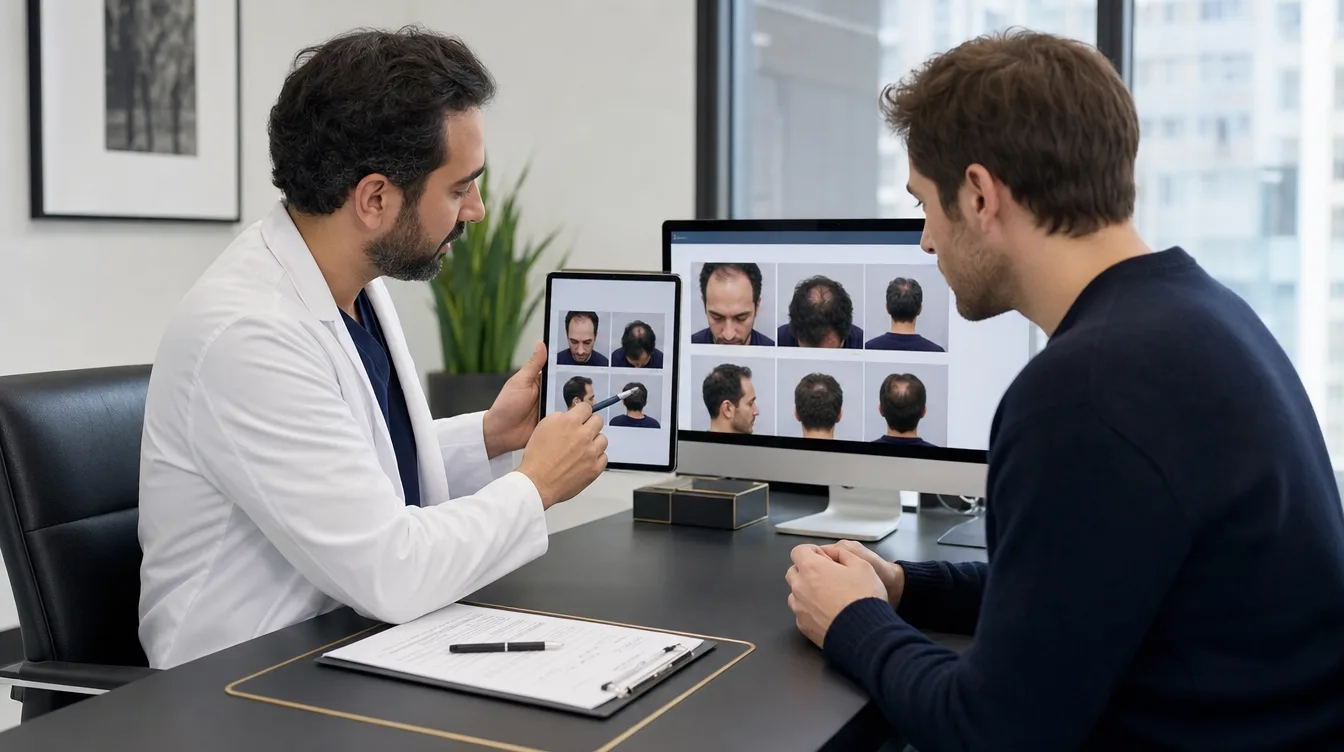
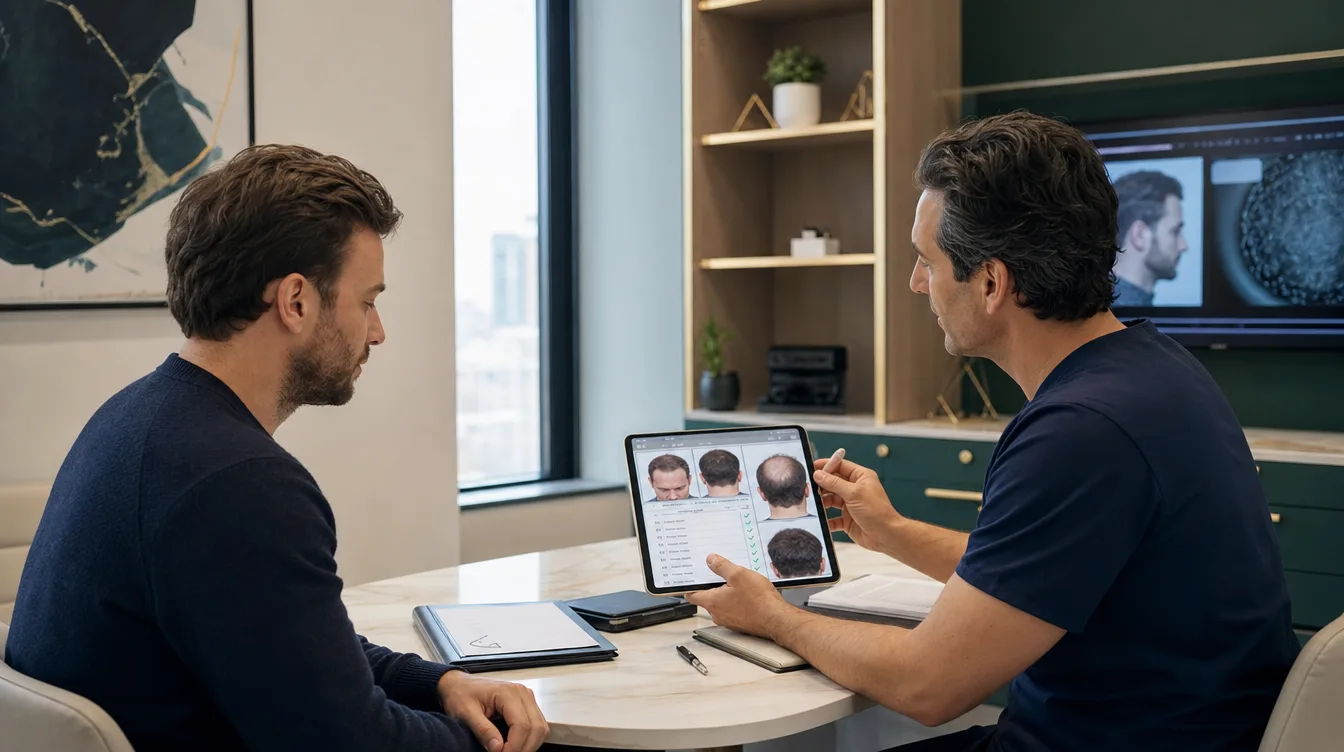
Clear photos help the team understand the pattern before the appointment. Include the front hairline, both temples, crown, sides, and donor area at the back of the scalp.
Use good lighting and avoid filters, fibres, heavy styling products, or angles that hide the pattern.
Write down your hair history
Bring a short timeline of when thinning began, what has changed recently, family history, previous procedures, and treatments you have tried.
Mention scalp conditions, medications, medical history, and anything that could affect healing or candidacy.
Prepare decision questions
A consultation is not only about whether FUE can be done. It should help you decide if it is the right time, the right design, and the right level of commitment.
Ask about recovery visibility, work timing, graft planning, alternatives, cost factors, and how follow-up is handled in Toronto or Montreal.
Consultation checklist
- Photos from multiple angles in natural light.
- Hair loss timeline and previous treatments.
- Questions about recovery, cost, and alternatives.
- Preferred city, timing, and virtual or in-clinic preference.
The better the starting information, the more honest and useful the consultation can be.
Educational information only. This article about prepare for a FUE hair transplant consultation does not replace medical consultation, diagnosis, or personalized postoperative instructions.
Next step
Plan a consultation around prepare for a FUE hair transplant consultation
Bring the details that matter for prepare for a FUE hair transplant consultation and the clinic can help decide whether the next step is diagnosis, treatment planning, support therapy, or observation.
Frequently asked questions about How to prepare for a FUE consultation
Clear answers for patients in Toronto, Montreal, and Quebec preparing a consultation about How to prepare for a FUE consultation with realistic expectations.
Why does How to prepare for a FUE consultation matter before a consultation?
This topic helps clarify photos, medical history, hair loss timeline, medication questions, goals, and expectations before choosing treatment. It prepares more precise questions and reduces the risk of deciding from a photo, price, or promise alone.
What should Toronto and Montreal patients track while reading How to prepare for a FUE consultation?
Track your timeline, areas of concern, treatments already tried, recovery constraints, and questions about what to ask, what to compare, and when a personal assessment matters. That context makes the consultation more useful.
How does How to prepare for a FUE consultation connect with FUE, beard, eyebrow, or non-surgical planning?
The article can help compare options, but the final plan depends on examination, donor supply, skin quality, follow-up needs, and realistic goals.
When should someone book an assessment after researching How to prepare for a FUE consultation?
Book an assessment when the questions become personal: candidacy, timing, cost, recovery, possible density, or the choice between surgical and non-surgical support.
How do I know whether How to prepare for a FUE consultation is appropriate for my case?
Suitability depends on history, the area being assessed, pattern stability, skin or scalp quality, and personal goals. A careful recommendation should explain what can be reviewed virtually and what requires an in-person clinical assessment.
What should I prepare before discussing How to prepare for a FUE consultation?
Bring or upload recent photos in simple lighting, treatments already tried, relevant medications, healing history, and your priorities. These details help the consultation stay specific and useful.
Can How to prepare for a FUE consultation start with a virtual review?
A first virtual review can help orient the conversation for patients in Toronto, Montreal, or elsewhere in Quebec, but it may not replace an in-person assessment when density, donor area, or skin quality needs to be examined.
What should follow-up clarify after I ask about How to prepare for a FUE consultation?
Follow-up should clarify next steps, timing, limitations, possible care, cost factors, and any signs that call for a more detailed assessment. Specific outcomes should not be promised before the case is reviewed.
About the author
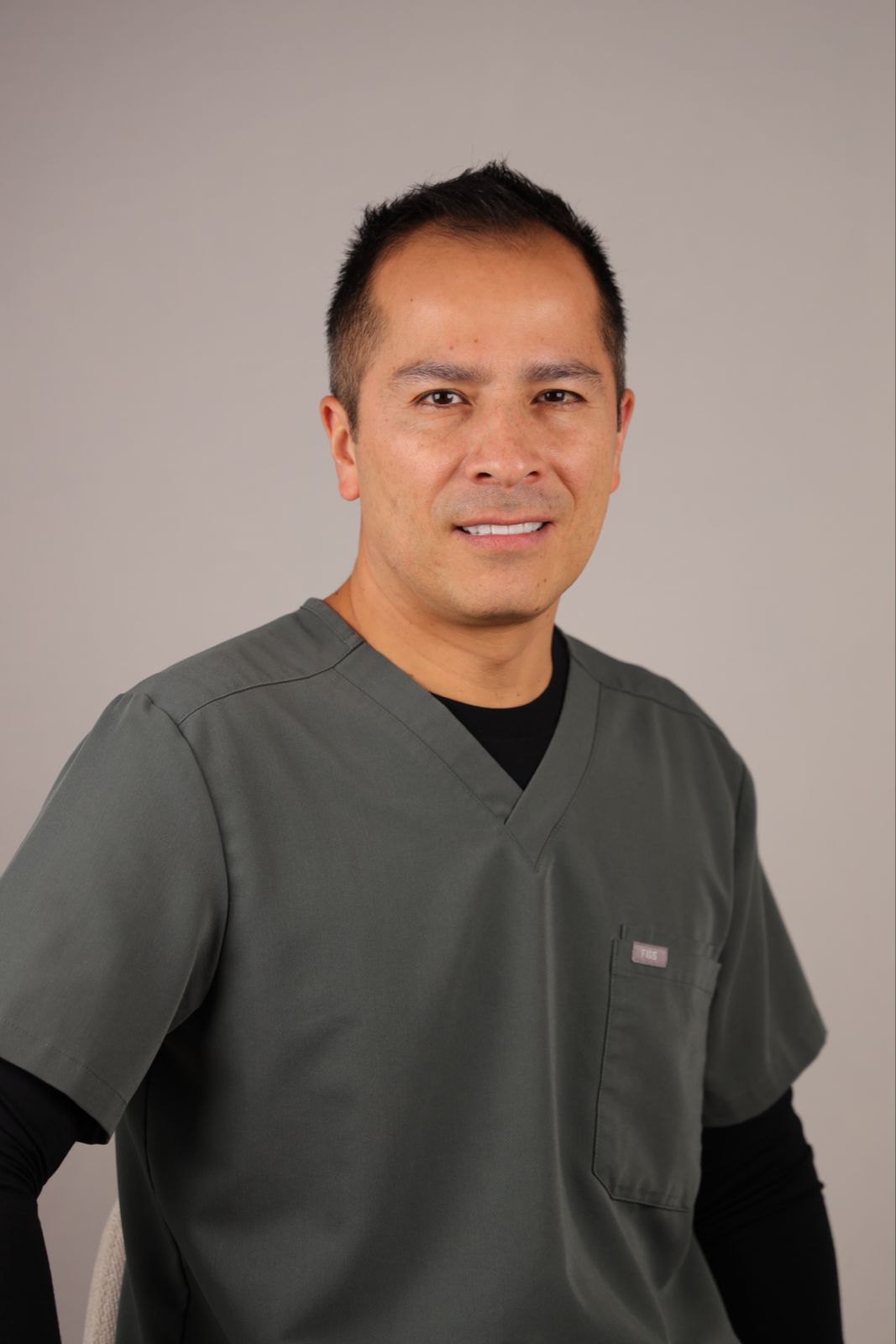
Edgar Augusto Castillo Delgado, MD on prepare for a FUE hair transplant consultation
Edgar Augusto Castillo Delgado, MD, creates educational guidance for Dr. Castillo Hair Restoration with a diagnosis-first approach. This article about prepare for a FUE hair transplant consultation is intended to help patients prepare better questions for consultation and does not replace individualized medical advice.